Teleradiology
What Is Teleradiology? A Complete 2026 Guide for U.S. Radiology
Key takeaways
- Teleradiology is the electronic transmission of radiology images (CT, MRI, X-ray, ultrasound) from one location to another for interpretation by a licensed radiologist.
- It is used for after-hours coverage, subspecialty reads, overflow volume, and multi-site consistency.
- In the U.S., radiologists must be licensed in the state where the patient is located (state law) and credentialed at the facility; separately, HIPAA requires a Business Associate Agreement with the provider.
- The two core report types are preliminary reads (fast, for immediate care decisions) and final reads (the signed, billable interpretation).
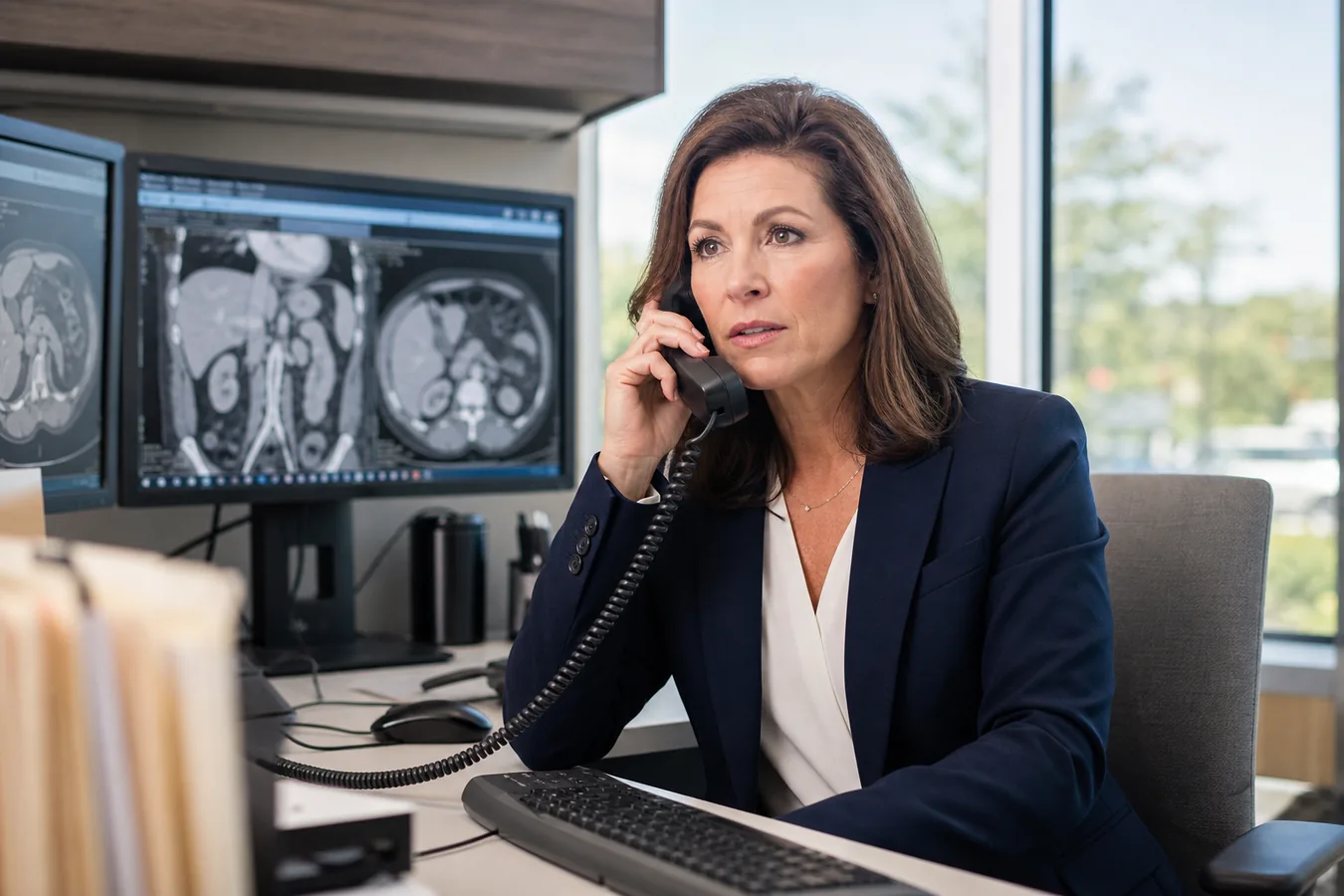
Teleradiology is the electronic transmission of medical images, such as CT, MRI, X-ray, and ultrasound studies, from one location to another so a licensed radiologist can interpret them remotely. It lets a radiology group, imaging center, or hospital get studies read when an on-site radiologist is unavailable, at capacity, or lacks the required subspecialty.
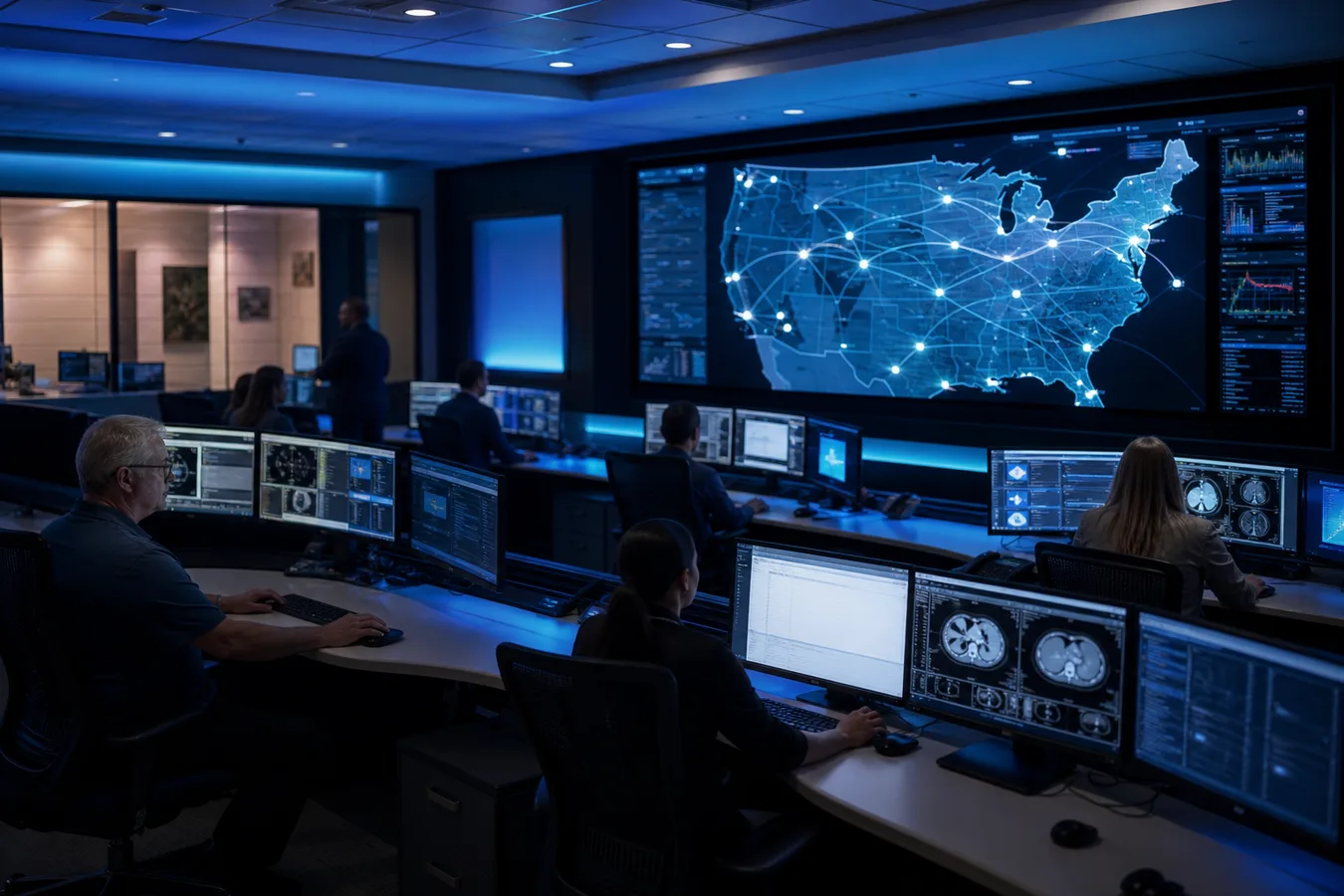
For most U.S. facilities, teleradiology is no longer an emergency backstop. It is a standard part of how coverage, turnaround time, and staffing economics are managed across days, nights, and weekends.
How does teleradiology work?
A study is acquired on a modality (for example, a CT scanner), routed through the facility's PACS (Picture Archiving and Communication System), and made available to a remote radiologist over a secure connection. The radiologist opens the study on a diagnostic viewer, interprets it, and returns a report to the ordering facility, often with critical findings relayed by phone.
- 1Image acquisition: the modality captures the study and pushes it to PACS.
- 2Secure routing: the study is transmitted to the reading radiologist over a secure, encrypted connection, usually inside the facility's own PACS.
- 3Interpretation: a licensed, credentialed radiologist reviews the images on a diagnostic-grade viewer.
- 4Reporting: the radiologist dictates a report; critical or STAT findings are relayed immediately per protocol.
- 5Documentation: the report and any critical-results communication are logged in the record.
What is the difference between preliminary and final reads?
A preliminary read is a fast interpretation used to guide immediate patient care, typically after hours or during peak volume. A final read is the complete, signed interpretation of record that the facility bills. Preliminary reads keep emergency and urgent care moving; final reads are usually completed by the group's own radiologists the next business day.
We cover this distinction in depth in Preliminary vs final reads in teleradiology, including who can issue each and how discrepancies are handled.
What are the main teleradiology coverage models?
| Model | What it covers | Best for |
|---|---|---|
| Nighthawk / after-hours | Overnight and weekend preliminary or final reads | ERs and groups without 24/7 in-house staff |
| Overflow / daytime | Extra reading capacity during peak volume | Groups with backlog and rising TAT |
| Subspecialty | Reads requiring specific expertise (neuro, MSK, pediatric) | Facilities lacking a subspecialist on staff |
| Final interpretation | Complete signed reports of record | Sites outsourcing full reading, not just prelims |
| PACS administration | Relays, calls, addendums, worklist support | Groups that need operational, not just reading, help |
Is teleradiology legal and HIPAA-compliant in the United States?
Yes, when three requirements are met. First, the interpreting radiologist must hold an active medical license in the state where the patient is physically located at the time of the exam. Second, the radiologist must be credentialed and privileged at the facility (hospitals may use credentialing by proxy under CMS and Joint Commission rules). Third, the service provider must sign a HIPAA Business Associate Agreement (BAA) and handle protected health information under it.
- State licensure where the patient is located
- Facility credentialing and privileging (credentialing by proxy is permitted for hospitals)
- A signed Business Associate Agreement before any PHI access
- Secure transmission and audit logging of studies and reports
What are the benefits of teleradiology?
- Faster turnaround time for urgent and after-hours studies
- 24/7/365 coverage without hiring for every shift
- Access to subspecialty expertise on demand
- Lower and more predictable cost than full-time or locum staffing for off-peak hours
- Consistent relay documentation and compliance across multiple sites
How do you choose a teleradiology partner?
Evaluate partners on licensure and credentialing coverage for your states, turnaround-time commitments, quality assurance process, and whether they work inside your PACS or force a new system. For U.S. groups, a same-country account team and documented critical-results relay process matter as much as raw reading speed.
If operational load, not just reading, is your bottleneck, a virtual PACS administrator can handle relays, calls, and addendum coordination so your radiologists stay on the worklist.
About the author
RadAssistPro Team
PACS Administration & Teleradiology Operations
The RadAssistPro team supports U.S. radiology groups, imaging centers, and hospital networks with virtual PACS administration and preliminary teleradiology coverage that runs inside their existing PACS. Guidance below reflects real onboarding, relay, and turnaround-time workflows the team runs across supported facilities.