
Who We Serve
STAT coverage for urgent care and emergency departments
Time-sensitive studies need reliable STAT prelims and documented critical relays — especially when your in-house readers are off shift. That is exactly what we run.
The After-Hours Problem
Patients do not schedule emergencies inside reading hours
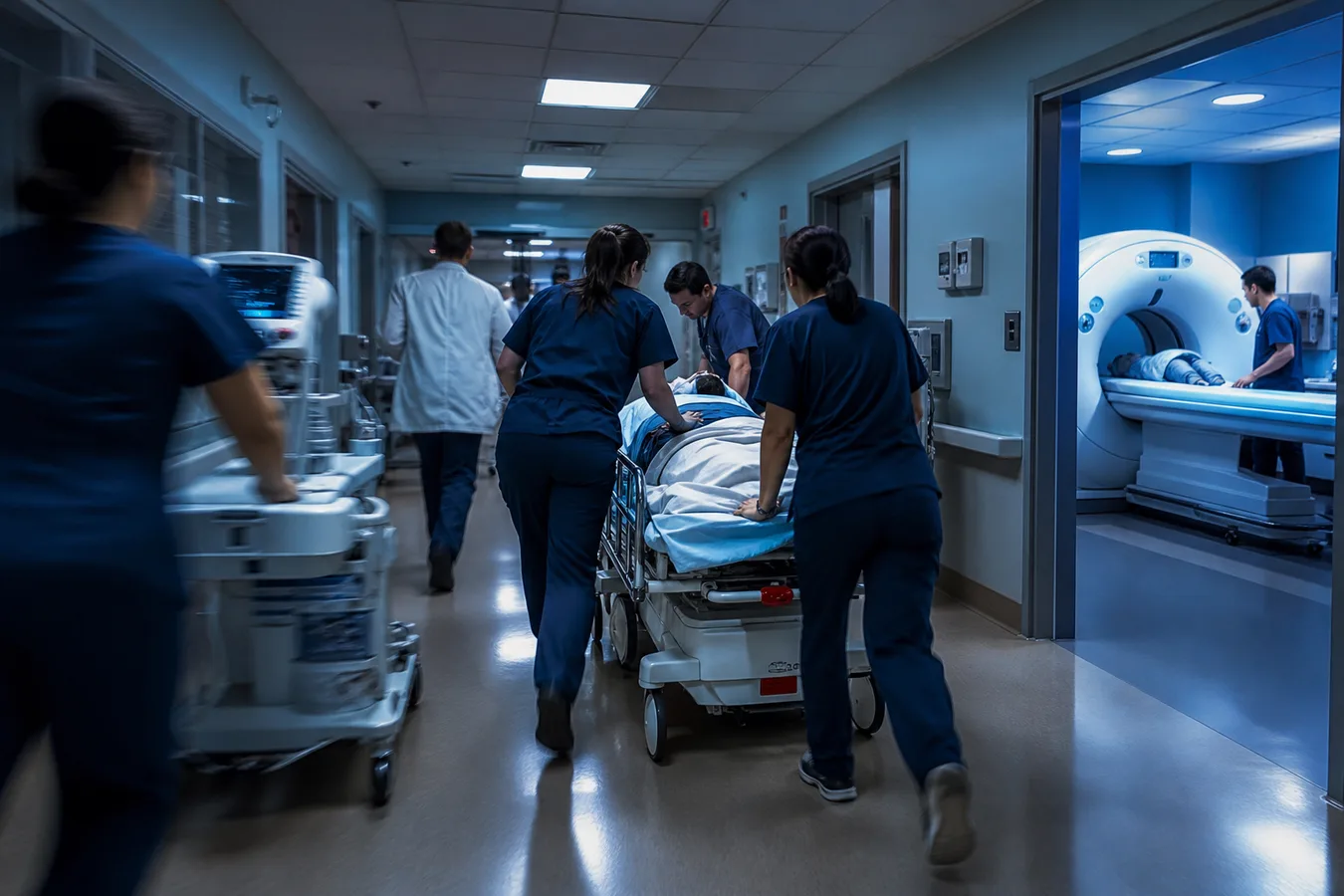
Urgent care and emergency volumes peak evenings, weekends, and holidays — precisely when in-house coverage is thinnest. Waiting on a morning read is not an option for a suspected fracture or an acute head CT, and undocumented phone relays are a compliance risk you should not carry.
- STAT prioritization by your written thresholds
- 24/7/365 coverage with no gap scheduling
- Critical result relays documented with an audit trail
- Per-report pricing that follows your actual census
18 min
Median Prelim TAT
2.4 min
Median Relay Time
24/7
Coverage, No Gaps
The Service Mix
Reads plus the relay discipline around them
Facilities with time-sensitive studies typically pair STAT prelim coverage with virtual PACS admins, so every critical finding is both read fast and relayed with documentation.
Compliance
Documented relays protect more than patients
In emergency and urgent care settings, the communication of a critical finding matters as much as the finding itself — and an undocumented phone call is invisible to your compliance program. Every RadAssistPro relay is executed against your written escalation protocol and logged with an audit trail: who was notified, when, and how. Median relay time across engagements is 2.4 minutes, with 100% documented relay compliance.
Coverage is designed around your census curve, not a staffing roster. Per-report pricing means a slow Tuesday night costs you almost nothing while a Saturday surge is fully covered, and STAT thresholds set during onboarding ensure the studies that cannot wait never queue behind the ones that can. Facilities running their own overnight providers use the same model for weekend and holiday gaps.
FAQ
Urgent care and ER questions
How fast are STAT studies read?
STAT thresholds and prioritization rules are set to your written protocols during onboarding. Median prelim turnaround across engagements is 18 minutes, with critical relays documented in a median of 2.4 minutes.
What happens when a critical finding comes back at 2 AM?
The finding is relayed to your on-shift provider per your escalation path and documented with an audit trail — the same workflow at 2 AM as at 2 PM, every day of the year.
Our volume swings hard between shifts. Do we pay for idle coverage?
Prelim reads are priced per report, so cost follows your actual volume. Coverage hours can scale up or down without penalties.
Which studies can you cover?
CT, MRI, X-ray, and ultrasound, matched to your case mix — including the extremity and chest films that dominate urgent care worklists.
Close your after-hours gap
Book a 15-minute call. We will map your peak-hour volumes and STAT rules to a coverage plan.